Introduction
As utility-scale photovoltaic (PV) projects continue to expand worldwide, the design of reliable and efficient electrical infrastructure has become increasingly important. A utility-scale solar substation is responsible for voltage transformation, medium-voltage power collection, system protection, and grid interconnection within large solar power plants.
In modern PV projects, inverter output voltage is typically limited to low-voltage levels such as 400V, 690V, or 800V. Before electrical energy can be transmitted to the utility grid, the voltage must be increased through step-up transformers and integrated into a medium-voltage collection network.
The design of the solar substation directly affects:
- transmission efficiency
- system losses
- grid compliance
- operational reliability
- long-distance power delivery capability
For utility-scale projects above 20MW, proper substation configuration becomes a critical engineering consideration.
Typical Electrical Topology of a Utility-Scale Solar Power Plant
A utility-scale solar power plant generally consists of:
- PV modules
- String inverters or central inverters
- LV AC combiner or distribution panels
- Step-up transformers
- Medium-voltage collector circuits
- MV switchgear or Ring Main Units (RMUs)
- Main booster substation
- Grid interconnection system
In most utility-scale projects, electrical energy generated by the inverters is stepped up from low-voltage levels to medium-voltage collector systems for efficient transmission across the solar farm.
Common medium-voltage collection levels may include:
- 11kV
- 22kV
- 33kV
- 35kV
depending on:
- plant capacity
- transmission distance
- regional standards
- utility grid requirements
The collected power is then transferred to the main booster substation, where voltage is further increased to transmission-level voltages before connection to the utility grid.
Medium-Voltage Collection System Design
In large-scale PV projects, transmitting power over long distances at low voltage is technically inefficient due to:
- excessive cable losses
- voltage drop
- increased conductor size requirements
- thermal limitations
For this reason, medium-voltage collection systems are widely adopted in utility-scale solar substations to improve transmission efficiency and optimize cable investment costs.
The selection of medium-voltage levels depends on several engineering factors, including:
- total installed capacity
- site layout
- cable routing distance
- local utility specifications
- future expansion requirements
Among modern utility-scale solar projects, 33kV and 35kV collection systems are commonly used because they provide a practical balance between insulation requirements, equipment cost, and transmission performance.
Step-Up Transformer Selection for Solar Power Plants
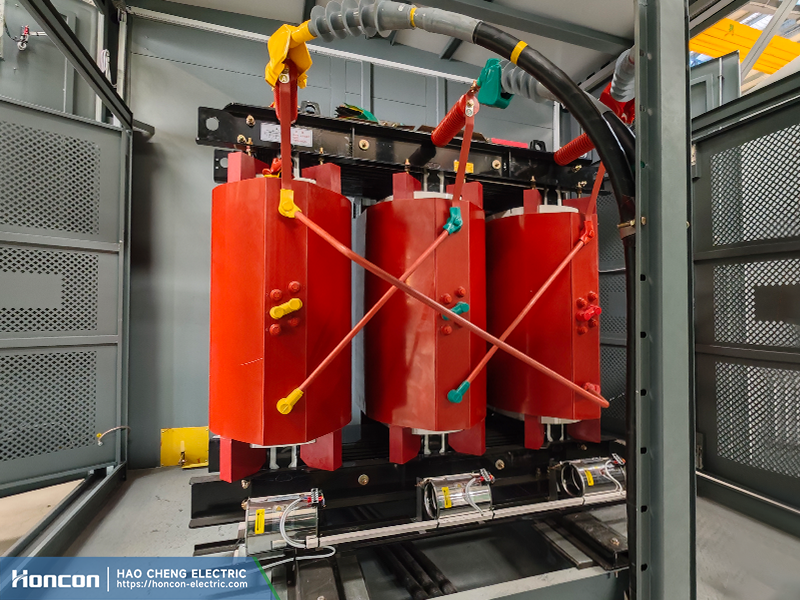
Step-up transformers are one of the most important components within a utility-scale solar substation. Their primary function is to increase inverter output voltage to the medium-voltage collection level while maintaining stable operation under fluctuating solar generation conditions.
Step-up transformers used in utility-scale solar substations are typically designed according to IEC 60076 standards.
Transformer ratings are selected according to project capacity and collector system design. Common capacities may include:
- 1000kVA
- 1600kVA
- 2500kVA
- 3150kVA
Transformer voltage ratings vary depending on:
- inverter output voltage
- MV collector system configuration
- utility interconnection requirements
- regional electrical standards
For utility-scale outdoor applications, oil-immersed transformers are widely adopted due to:
- higher overload capability
- better thermal performance
- long service life
- suitability for harsh outdoor environments
Important technical considerations include:
- load loss optimization
- no-load loss reduction
- harmonic withstand capability
- temperature rise limits
- insulation coordination
- cooling methods such as ONAN or ONAF
Role of RMU and MV Switchgear in Utility-Scale Solar Substations
Medium-voltage switchgear systems are essential for feeder protection, fault isolation, and operational safety within the PV collection network.
Depending on the collector system topology, Ring Main Units (RMUs) may be used for:
- cable sectionalizing
- fault isolation
- improving supply continuity
- simplifying loop network configuration
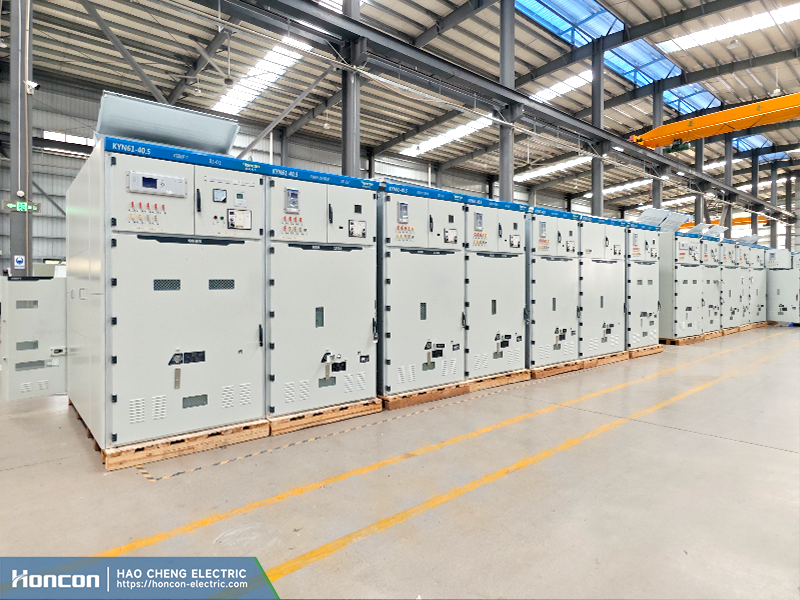
In larger substations, metal-clad MV switchgear with vacuum circuit breakers is more commonly adopted for:
- feeder protection
- transformer protection
- busbar sectionalizing
- SCADA integration
Protection systems may include:
- overcurrent protection
- earth fault protection
- differential protection
- remote monitoring and communication functions
Prefabricated Substation Solutions for Solar Projects
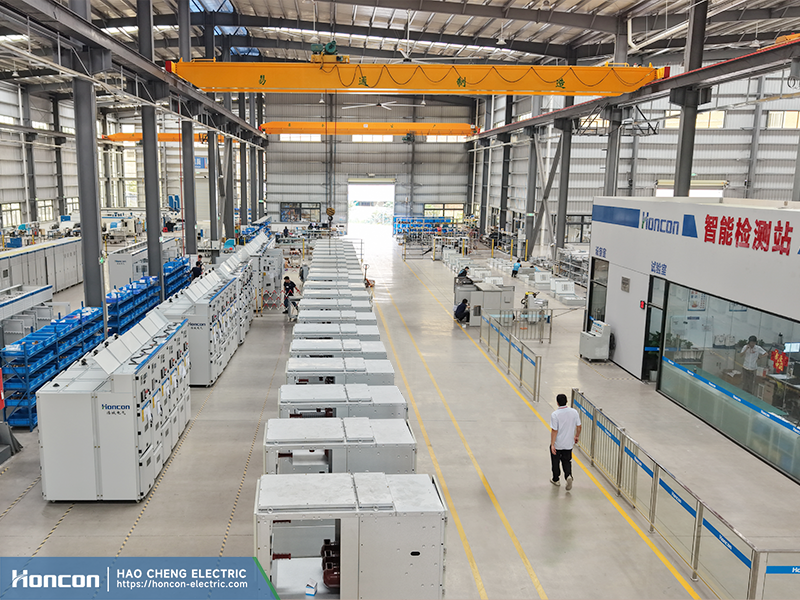
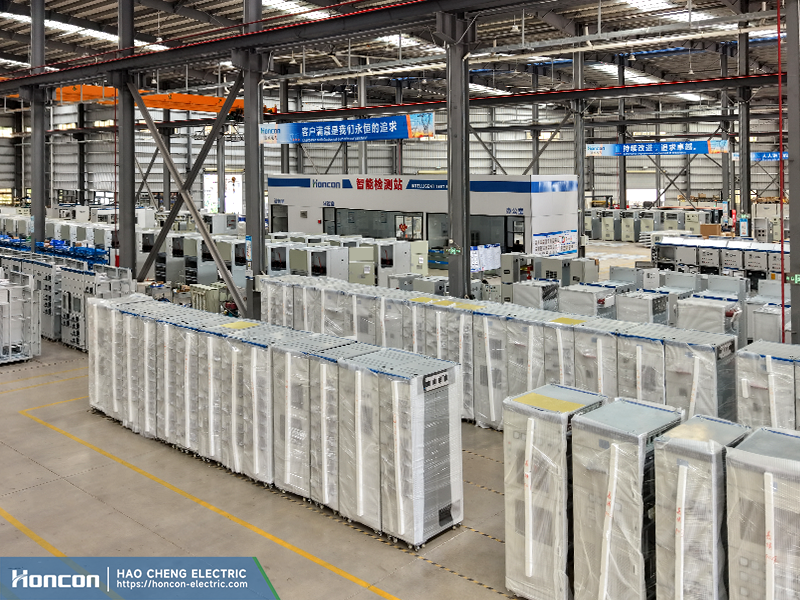
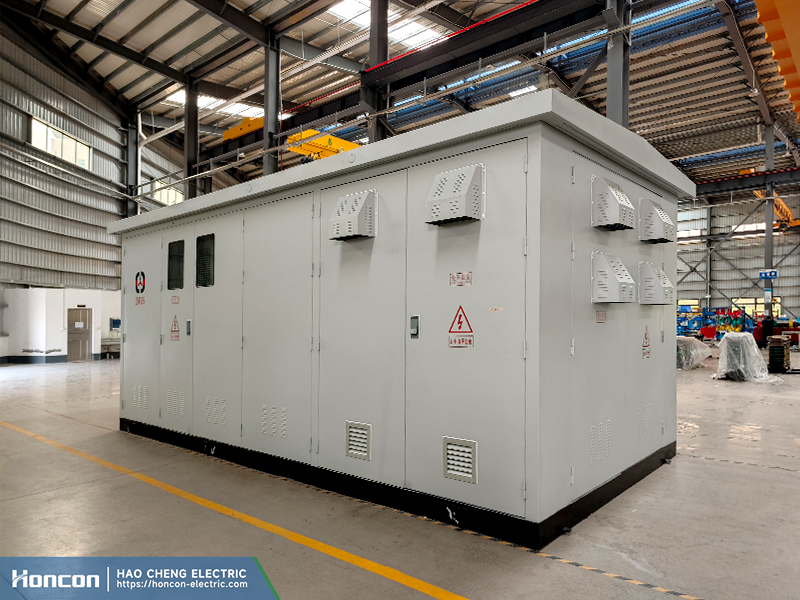
Prefabricated substations are increasingly used in utility-scale solar projects because they reduce installation time and simplify on-site construction.
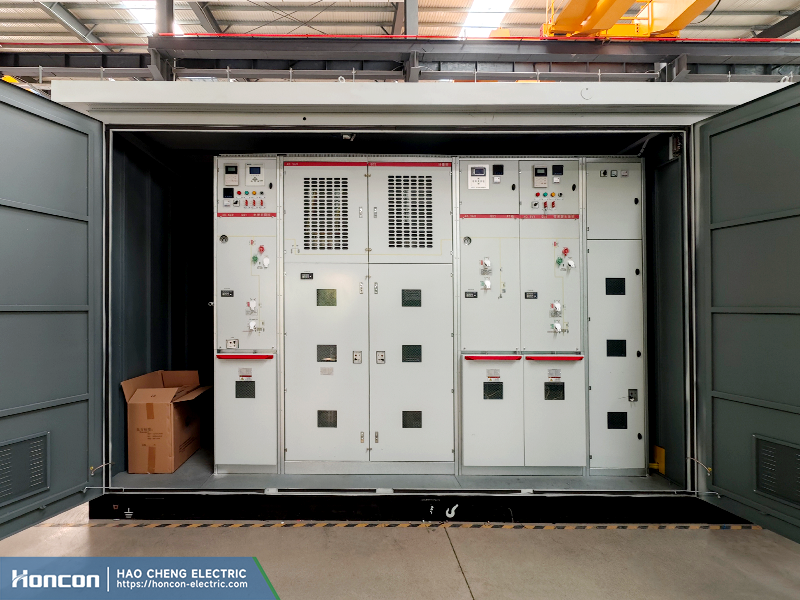
A prefabricated utility-scale solar substation may integrate:
- MV switchgear
- step-up transformers
- LV auxiliary panels
- relay protection systems
- communication equipment
- HVAC and fire protection systems
Compared with conventional civil substations, prefabricated solutions offer:
- shorter construction schedules
- factory-tested integration
- lower on-site labor requirements
- easier transportation and installation
- improved quality consistency
This approach is especially suitable for remote solar farm projects where construction conditions are challenging.
Engineering Challenges in Utility-Scale Solar Substation Design
Several technical challenges must be considered during utility-scale solar substation design.
Harmonic Distortion
Power electronic converters inside PV inverters may introduce harmonic currents into the system, requiring transformers and switchgear with appropriate harmonic withstand capability.
High Ambient Temperature
Projects in desert, tropical, or high-radiation regions require equipment designed for elevated ambient temperatures and continuous outdoor operation.
Grid Code Compliance
Many utilities require:
- reactive power compensation
- voltage regulation capability
- low-voltage ride-through (LVRT)
- remote dispatch communication
Environmental Protection
Outdoor substations may require:
- anti-corrosion treatment
- IP-rated enclosures
- dust protection
- salt spray resistance
to ensure long-term operational reliability.
Haocheng Electric Utility-Scale Solar Substation Solutions
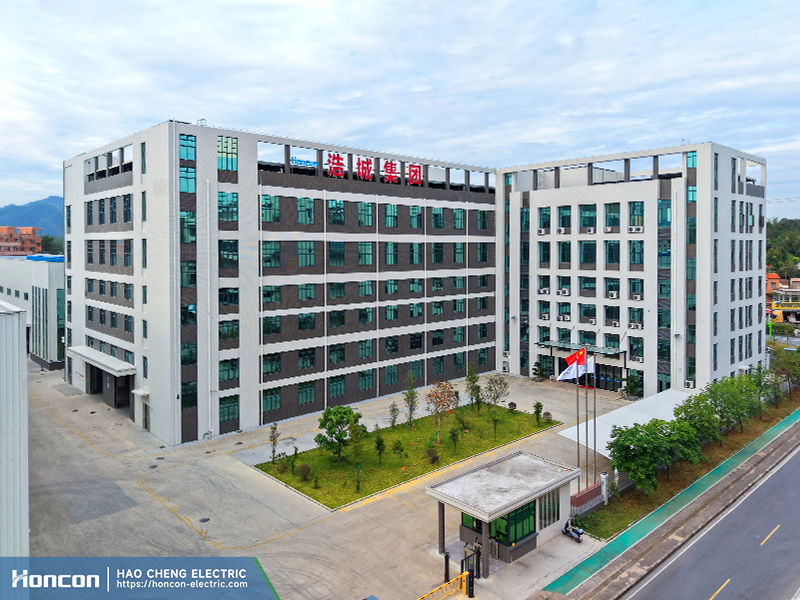
Haocheng Electric provides customized utility-scale solar substation solutions for PV projects worldwide, including:
- step-up transformers
- compact substations
- RMU systems
- MV and HV switchgear
- prefabricated substations
Our solutions are designed according to IEC standards and can be customized based on:
- local grid specifications
- project capacity
- environmental conditions
- utility requirements
With extensive experience in international power projects, Haocheng Electric supports EPC contractors, developers, and utility customers with reliable and efficient solar substation solutions.
Conclusion
A well-designed utility-scale solar substation plays a critical role in ensuring efficient power collection, stable grid interconnection, and long-term operational reliability in modern PV power plants.
As utility-scale solar projects continue to increase in capacity and complexity, properly engineered substations, transformers, and medium-voltage systems become essential for achieving safe and efficient power transmission.