Cable Branch Box vs RMU: Applications and Selection Guide
In modern medium voltage distribution systems, choosing the right equipment is essential for balancing cost, reliability, and operational flexibility.
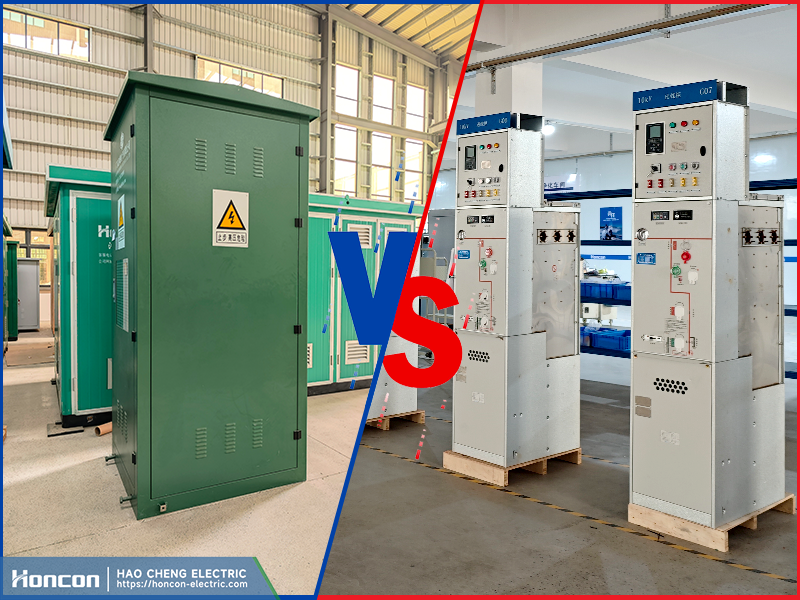
Among the most commonly compared solutions are cable branch box vs RMU (Ring Main Unit). While both are used in cable-based distribution networks, their functions and application scenarios differ significantly.
Understanding where each solution fits best can help optimize both system performance and project investment.
What Is a Cable Branch Box?
A cable branch box is primarily used as a connection and branching point in cable networks. It allows one incoming feeder to be split into multiple outgoing feeders without complex switching equipment.
Typical characteristics include:
- Simple structure
- Compact size
- Lower cost
- Optional switch configuration (with or without load break switch)
Cable branch boxes are widely used where basic distribution without frequent switching operations is required.
What Is an RMU (Ring Main Unit)?
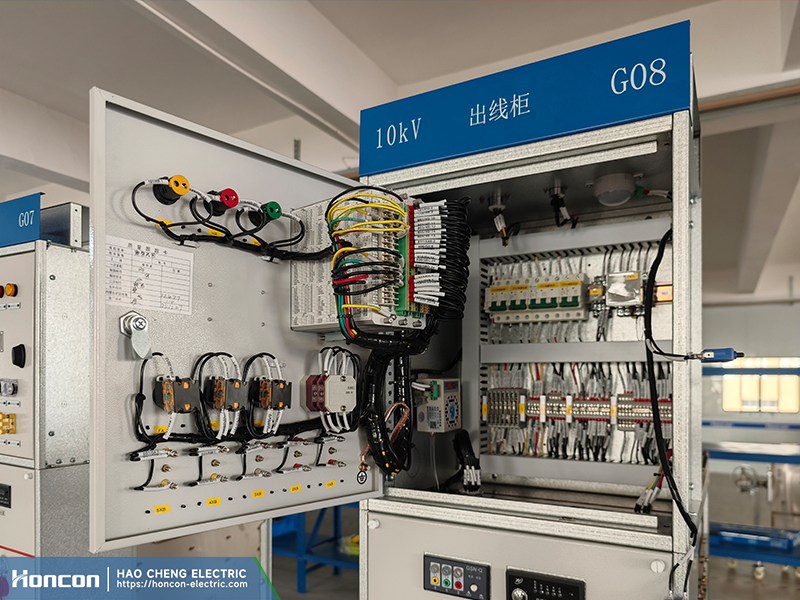
An RMU is a fully functional medium voltage switchgear unit designed for ring network distribution systems. It integrates:
- Load break switches
- Circuit breakers
- Protection and control devices
Compared with a cable branch box, an RMU provides higher reliability, fault isolation capability, and automation compatibility.
Typical Applications of Cable Branch Box vs RMU
Understanding application scenarios is key when comparing cable branch box vs RMU.
Cable Branch Box Applications
Cable branch boxes are commonly used in:
- Urban cable distribution networks
- Residential and commercial buildings
- Industrial parks with stable loads
- Underground cable branching points
They are ideal when:
- Budget is limited
- System structure is simple
- No frequent switching is required
RMU Applications
RMUs are typically used in:
- Ring network distribution systems
- Industrial facilities with high reliability requirements
- Data centers and critical infrastructure
- Smart grid and automated distribution networks
They are preferred when:
- Fault isolation is required
- Network continuity is critical
- Remote control or automation is needed
Key Differences Between Cable Branch Box and RMU
When evaluating cable branch box vs RMU, the main differences can be summarized as follows:
- Function:
Cable branch box → power distribution only
RMU → switching, protection, and control - Cost:
Cable branch box → lower
RMU → higher - Reliability:
Cable branch box → basic
RMU → high (supports fault isolation) - Maintenance:
Cable branch box → minimal
RMU → requires professional operation - Automation:
Cable branch box → limited
RMU → supports smart grid integration
How to Choose Between Cable Branch Box vs RMU
Selecting between these two solutions depends on your project requirements.
Choose a cable branch box if:
- You need a cost-effective solution
- The network is simple
- Load switching is infrequent
Choose an RMU if:
- Power supply continuity is critical
- Fault isolation is required
- The system involves automation or remote control
In many real-world projects, both devices are used together to achieve a balance between cost and performance.
Conclusion
The comparison of cable branch box vs RMU highlights a clear distinction: simplicity versus functionality.
Cable branch boxes provide an economical solution for basic distribution needs, while RMUs deliver advanced control and reliability for complex systems.
By understanding their applications and differences, you can select the most suitable solution for your distribution network and ensure long-term operational efficiency.
To learn more, please kindly find our Youtube Channel: HONCON.