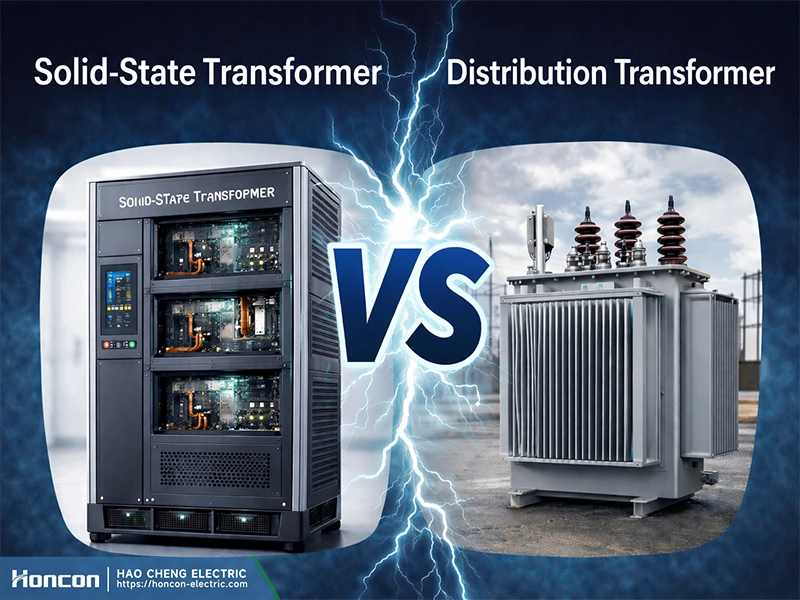
Solid-State Transformer vs. Distribution Transformer
As power systems evolve toward digitalization, renewable energy integration, and smart grids, the comparison between solid-state transformer vs distribution transformer is becoming increasingly important. While traditional distribution transformers have been the backbone of power distribution for decades, solid-state transformers are emerging as a next-generation solution with advanced control, flexibility, and intelligence. According to Hitachi Energy, solid-state transformer technology is being actively deployed in smart grid demonstration projects in collaboration with leading research institutions.
Understanding the technical and functional differences between solid-state transformer and distribution transformer helps utilities, EPC contractors, and industrial users make informed decisions for future-ready power systems.
What Is a Traditional Distribution Transformer?
A traditional distribution transformer is an electromagnetic device used to step down medium-voltage electricity (such as 11kV, 20kV, or 33kV) to low-voltage levels (typically 400V or 230V) for end users. In the context of solid-state transformer vs distribution transformer, the distribution transformer represents the conventional and most widely deployed solution.
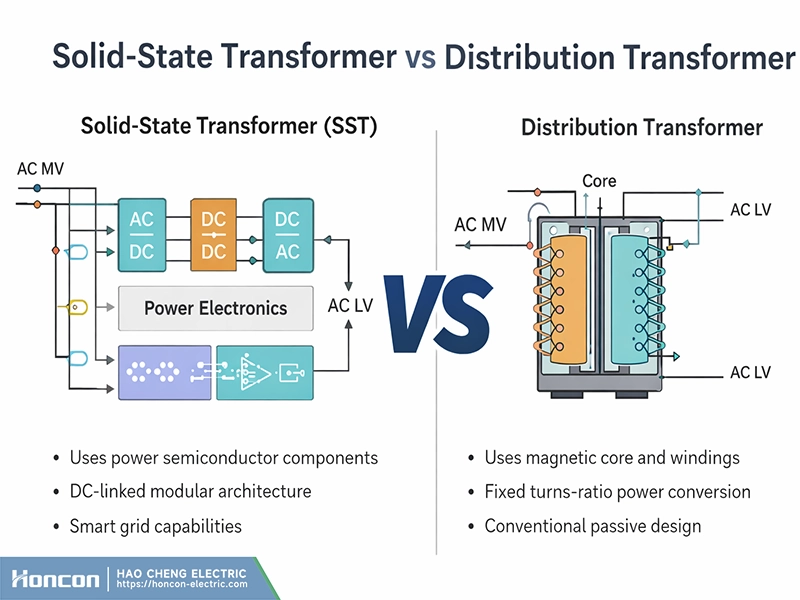
Distribution transformers operate based on low-frequency magnetic induction and mainly consist of:
Copper or aluminum windings
Laminated steel cores
Insulation and cooling systems
Key advantages of a distribution transformer include:
High reliability and proven long service life
Simple structure and mature manufacturing technology
High efficiency at rated load
Low initial investment and easy maintenance
However, in the comparison of solid-state transformer vs distribution transformer, a traditional distribution transformer is a passive device. It cannot actively regulate voltage, manage harmonics, or support advanced power quality functions without additional external equipment.
What Is a Solid-State Transformer?
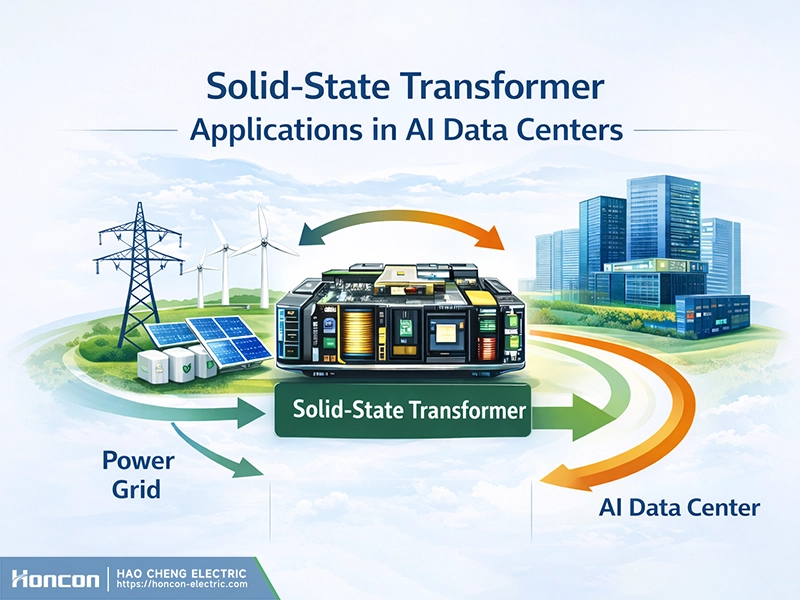
A solid-state transformer (SST) is a power-electronic-based transformer that replaces traditional magnetic components with power semiconductor converters and high-frequency isolation transformers. In the discussion of solid-state transformer vs distribution transformer, the solid-state transformer represents a digitally controlled and highly flexible solution.
A typical solid-state transformer consists of three main stages:
AC-DC conversion
High-frequency isolation and voltage transformation
DC-AC conversion
Compared with a distribution transformer, a solid-state transformer enables real-time digital control and advanced power management.
Key features of a solid-state transformer include:
Compact size and reduced weight
Fast dynamic voltage regulation
Power factor correction and harmonic mitigation
Bidirectional power flow capability
Native compatibility with DC systems and renewable energy sources
Key Differences Between Solid-State Transformer and Distribution Transformer
Technology Principle
In a traditional distribution transformer, voltage transformation is based on low-frequency (50/60 Hz) magnetic coupling. In contrast, a solid-state transformer uses high-frequency power electronics, enabling smaller magnetic components and faster dynamic response. This is a fundamental distinction in solid-state transformer vs distribution transformer technology.
Functionality
A distribution transformer mainly provides passive voltage transformation. A solid-state transformer is an active device that can regulate voltage, control power flow, and provide intelligent grid-support functions. This makes the solid-state transformer more suitable for modern digital power systems.
Power Quality Control
In solid-state transformer vs distribution transformer applications, the solid-state transformer can actively suppress harmonics, compensate reactive power, and stabilize voltage. A traditional distribution transformer cannot perform these functions without external power quality equipment.
Integration with Renewable Energy
A solid-state transformer is well suited for integrating solar PV, wind power, battery energy storage, and electric vehicle charging systems. The ability to support DC connections and bidirectional power flow is a major advantage in solid-state transformer vs distribution transformer use cases.
Cost and Technology Maturity
A distribution transformer is highly mature, widely standardized, and cost-effective. A solid-state transformer is still in early commercial adoption, with higher initial investment and more complex control systems. However, rapid advances in power electronics are improving the economic feasibility of solid-state transformer technology.
Application Scenarios
In solid-state transformer vs distribution transformer comparisons, solid-state transformers are particularly attractive in:
Smart grids and digital substations
Renewable energy integration
Electric vehicle fast-charging stations
DC microgrids and hybrid AC/DC networks
Urban power distribution with limited space
Meanwhile, distribution transformers will continue to dominate conventional utility networks due to their proven reliability, simplicity, and low total cost of ownership.
Future Outlook
In the long term, solid-state transformer technology is expected to play an increasingly important role in next-generation power systems. Although a solid-state transformer will not fully replace a distribution transformer in the near future, it will complement traditional solutions in applications requiring high controllability, intelligence, and flexibility.
Understanding the real-world differences in solid-state transformer vs distribution transformer performance helps utilities, EPC contractors, and industrial users design future-ready and intelligent power distribution infrastructures.