Low Voltage Switchgear Positions Explained: Test, Connected & Isolated
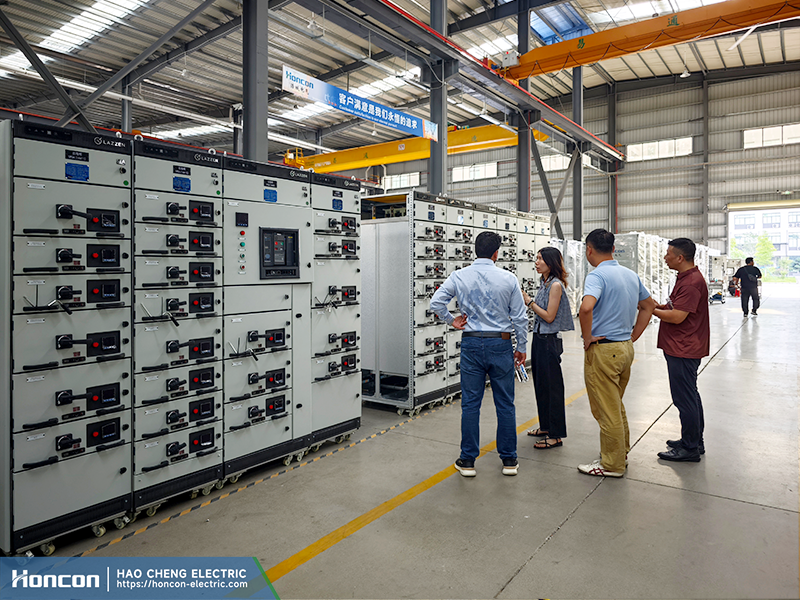
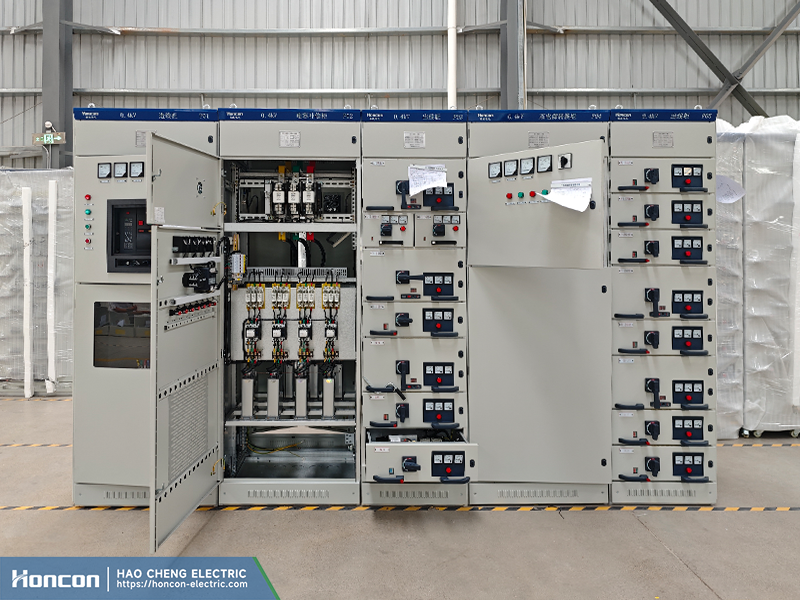
In modern low voltage switchgear positions design, especially in low voltage switchgear systems such as MCC panels and draw-out assemblies, different mechanical positions are used to define the operating condition of the equipment.
These low voltage switchgear positions—including connected position, test position, and isolated position—determine how the functional unit interacts with the busbar system and the load circuit.
Understanding low voltage switchgear positions is essential for safe operation, maintenance, and commissioning of electrical distribution systems.
What Are Low Voltage Switchgear Positions?
Low voltage switchgear positions refer to the mechanical operating states of a withdrawable (draw-out) functional unit inside a switchgear compartment.
These positions control:
- Whether the main circuit is connected to the busbar
- Whether the control circuit is active
- Whether the equipment is safe for maintenance or testing
Unlike simple ON/OFF switching, switchgear positions define physical isolation levels.
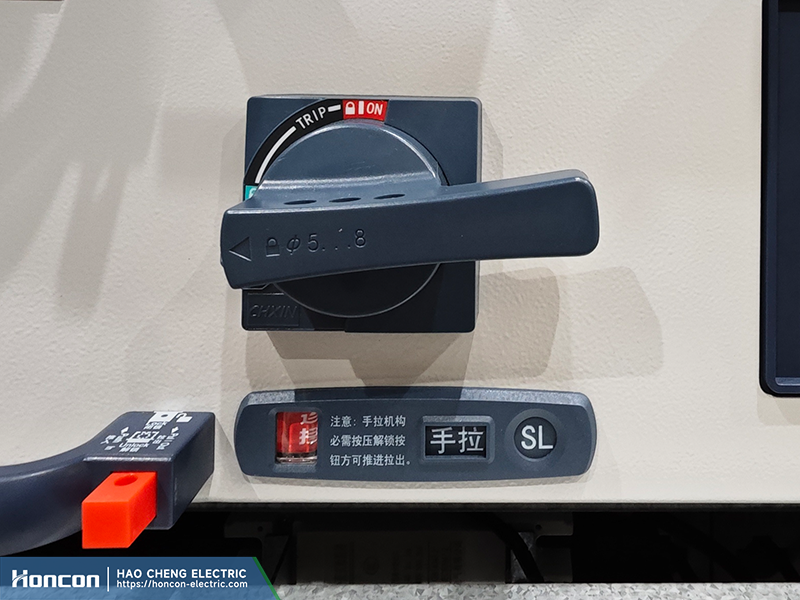
Connected Position in Switchgear
The connected position is the normal operating state of a draw-out switchgear unit.
In this position:
- The main contacts are fully engaged with the busbar system
- Power is supplied to downstream loads
- Protection and monitoring functions operate normally
- The unit is ready for switching operations (ON/OFF control)
Typical usage
- Normal system operation
- Continuous power distribution
- Industrial and commercial power supply
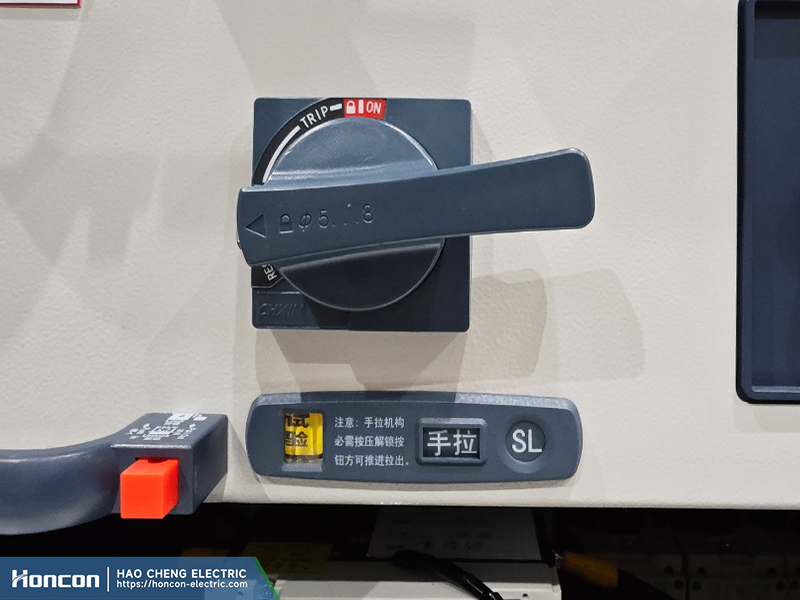
Test Position in Switchgear
The test position is designed for safe functional testing without energizing the main power circuit.
In this position:
- The main circuit is disconnected from the busbar
- Control and auxiliary circuits may remain energized (depending on design)
- Electrical and functional testing can be performed safely
- No power is delivered to downstream loads
Typical test functions
- Switching operation tests (open/close)
- Protection relay verification
- Control circuit checks
- Metering and indication tests
- Interlock function verification
- Communication system testing
The test position is especially important during commissioning and preventive maintenance.
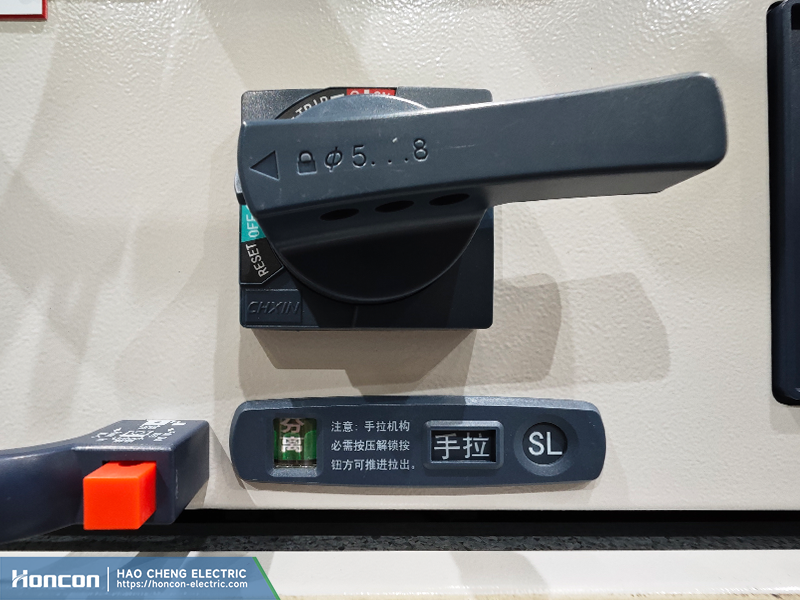
Isolated Position in Switchgear
The isolated position provides maximum electrical separation between the functional unit and the power system.
In this position:
- The main contacts are fully withdrawn or separated from the busbar
- The unit is electrically isolated from the system
- Maintenance work can be carried out safely
- Risk of accidental energization is minimized
Typical usage
- Maintenance and repair
- Equipment replacement
- Long-term shutdown
- Safety inspection procedures
Comparison of Switchgear Positions
| Position | Main Circuit | Control Circuit | Function |
|---|---|---|---|
| Connected | Energized | Active | Normal operation |
| Test | Disconnected | Partially/fully active | Functional testing |
| Isolated | Fully separated | Usually inactive | Maintenance & safety |
Common Misunderstandings in the Field
1. Assuming “OFF” means fully safe
Opening a circuit does not guarantee isolation.
In draw-out systems, true safety requires moving the unit to the isolated position.
2. Confusing test position with service position
The test position allows control testing, but:
- It does NOT supply power to the load
- It is not suitable for normal operation
3. Improper operation of draw-out mechanism
Forcing racking operations without correct breaker status or interlock conditions may damage:
- Mechanical interlocks
- Contact systems
- Safety shutters
Why Switchgear Position Design Matters
Modern low voltage switchgear integrates complex protection, monitoring, and automation systems.
The position system ensures:
- Safe commissioning without load
- Reduced downtime during maintenance
- Controlled isolation of power circuits
- Improved operational safety
- Compliance with electrical safety standards
For critical infrastructure such as data centers, factories, hospitals, and energy systems, these features are essential.
Modern low voltage switchgear position design is aligned with international safety principles defined by IEC standards for electrical equipment safety and isolation requirements.
Best Practices for Safe Operation
To ensure safe and reliable operation of low voltage switchgear:
- Always verify equipment position before operation
- Follow lockout/tagout (LOTO) procedures
- Never bypass mechanical or electrical interlocks
- Confirm isolation before maintenance
- Use test position for commissioning only
- Ensure proper racking sequence during operation
Conclusion
Low voltage switchgear positions—connected, test, and isolated—form the foundation of safe operation in draw-out power distribution systems.
Understanding these positions helps operators:
- Improve electrical safety
- Reduce operational errors
- Enhance maintenance efficiency
- Ensure reliable power distribution
For modern industrial and commercial power systems, correct use of switchgear positions is not only a technical requirement but also a critical safety practice.