Why Solar Power Plants Need PV Step-Up Substations
Solar power plants generate electricity through photovoltaic modules and inverters, but the electricity produced is typically at low voltage levels (400V–800V). This voltage is not suitable for direct transmission to medium-voltage distribution networks or utility grids.
Without proper voltage conversion, power transmission losses increase, system stability decreases, and grid connection becomes unreliable.
A PV step-up substation solves this problem by efficiently converting low-voltage solar power into medium-voltage electricity suitable for grid transmission. As a result, it becomes one of the most critical electrical components in solar power plant infrastructure.
What Is a PV Step-Up Substation?
A PV step-up substation is a compact electrical unit designed specifically for photovoltaic power plants. It integrates multiple electrical components into a single system to enable safe and efficient grid connection.
Main Components
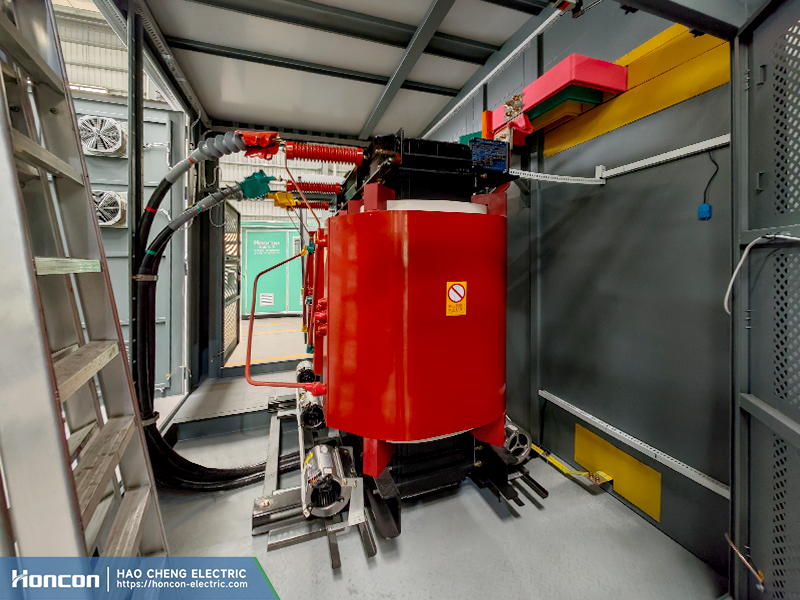
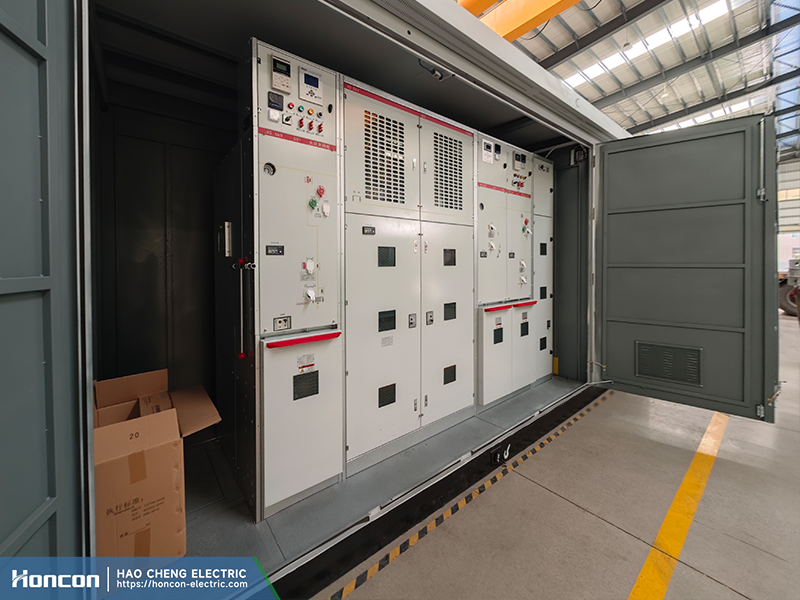
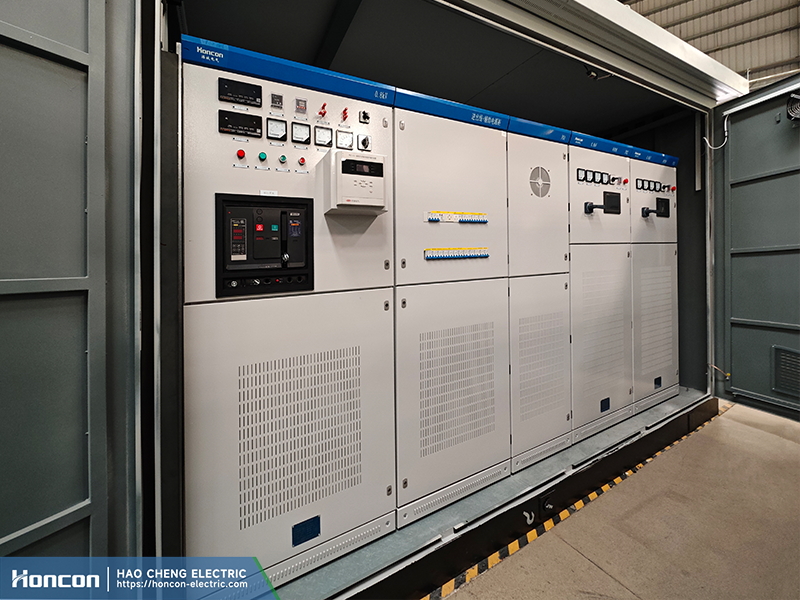
A typical solar step-up substation usually includes:
PV step-up substations typically integrate transformers, medium-voltage switchgear, and protection systems designed according to international standards such as those defined by the International Electrotechnical Commission (IEC)
- Step-up transformer
- Medium-voltage switchgear
- Low-voltage switchgear
- Protection and control devices
- Monitoring and communication systems
These integrated components allow solar plants to collect inverter output power, raise the voltage level, and deliver electricity to the grid safely and efficiently.
How PV Step-Up Substations Improve Grid Connection Efficiency
Efficient Voltage Conversion
The step-up transformer increases inverter output voltage to 10kV, 20kV, or 35kV, which significantly reduces transmission losses.
Centralized Power Collection
Multiple inverter outputs can be collected and managed within a single substation, simplifying the electrical layout of the solar plant.
Protection and Grid Stability
Integrated protection systems help prevent electrical faults such as:
- overvoltage
- short circuits
- abnormal current conditions
This ensures stable operation of both the solar plant and the connected power grid.
Key Advantages of Dedicated Solar Step-Up Substations
Designed for Solar Operating Conditions
Unlike general-purpose substations, PV step-up substations are optimized for fluctuating solar generation and inverter-based power systems.
High Reliability in Outdoor Environments
Solar power plants are often installed in remote areas with challenging environmental conditions. Dedicated substations are built for long-term outdoor operation with strong environmental protection.
Lower Operation and Maintenance Costs
Modern PV substations feature:
- high-efficiency transformers
- modular design
- simplified maintenance access
These characteristics reduce maintenance frequency and improve overall operational efficiency.
Typical Applications in Solar Projects
Utility-Scale Solar Farms
Large solar farms rely on multiple PV step-up substations to collect electricity from inverter stations and connect to medium-voltage grids.
Distributed Solar Power Plants
Industrial parks, commercial buildings, and rooftop solar projects also require compact step-up substations for safe grid integration.
Reliable PV Step-Up Substation Solutions from Haocheng Electric
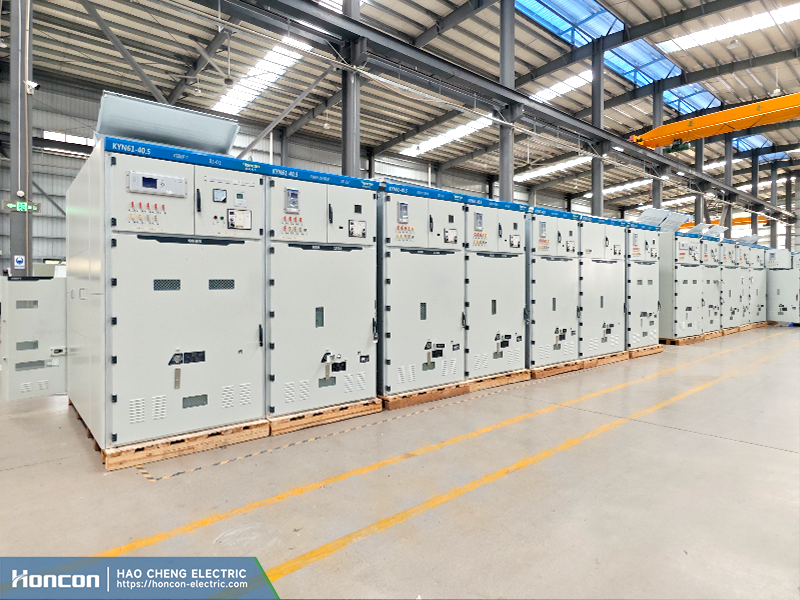
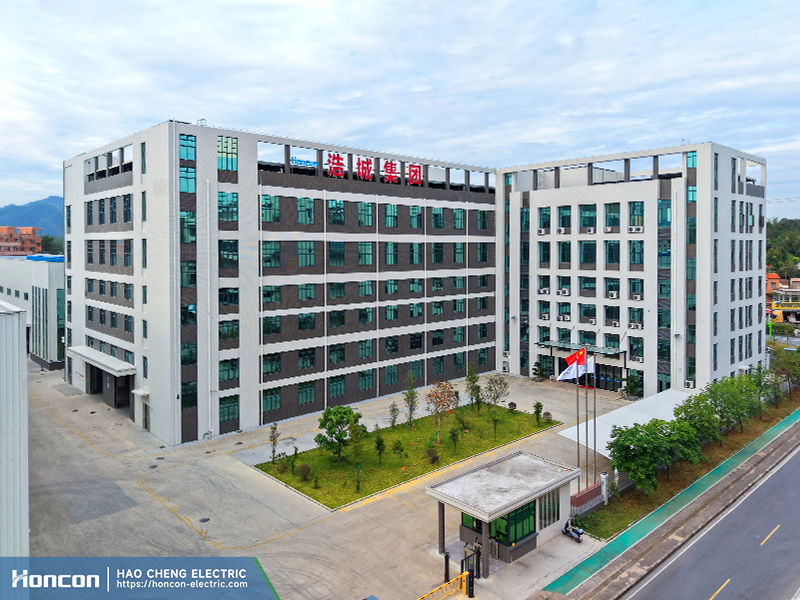
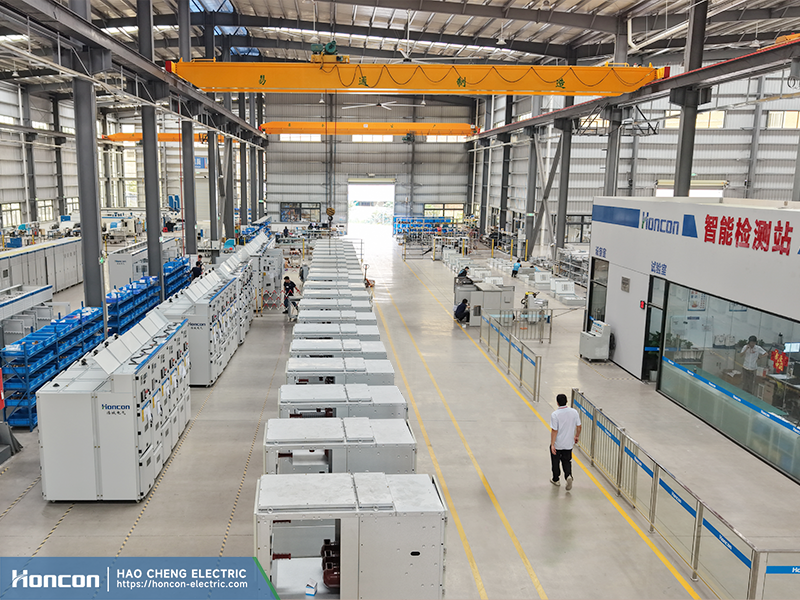
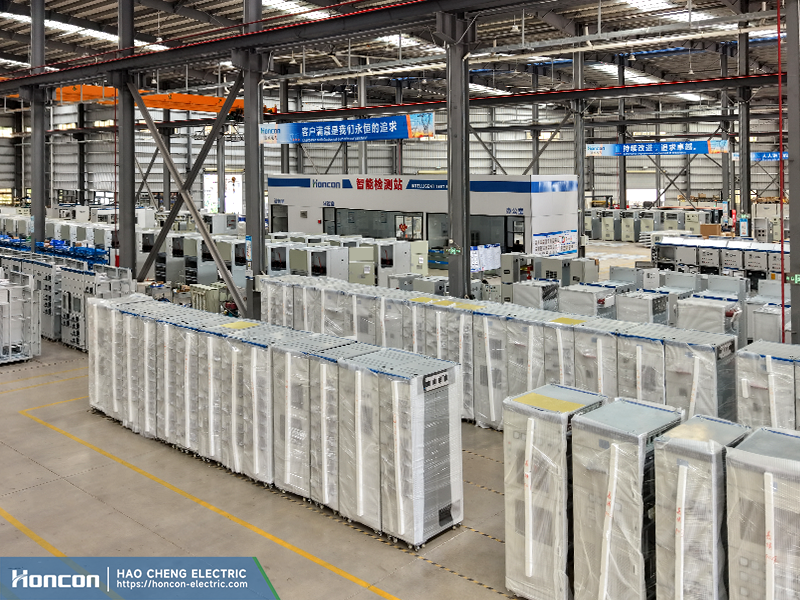
With years of experience in manufacturing transformers and medium- and low-voltage switchgear, Haocheng Electric provides integrated electrical solutions for renewable energy projects.
Our capabilities include:
- advanced transformer production lines
- medium-voltage and low-voltage switchgear manufacturing
- compact substations for solar power plants
- customized electrical solutions for global markets
Based on these capabilities, we manufacture standard compact substations and PV-dedicated step-up substations, helping solar power projects achieve efficient and reliable grid connection.